USS Gerald R. Ford Carrier Strike Group Launched Iran Strikes from Arabian Sea, Navy Confirms
The USS Gerald R. Ford and its nine-ship strike group served as the forward naval platform for U.S. strikes on Iran's nuclear sites in May 2026, launching over 200 carrier sorties in 72 hours while operating within range of Iranian anti-ship missiles.
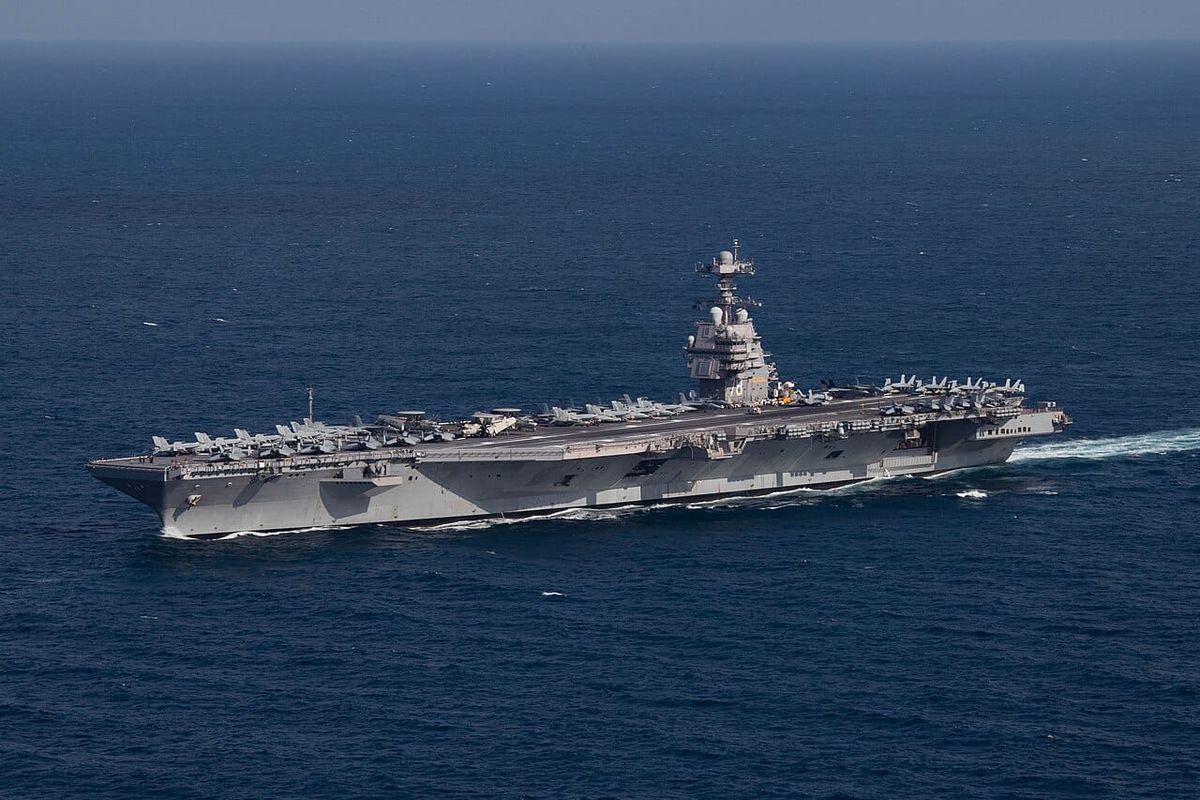
The United States Navy has confirmed that the USS Gerald R. Ford Carrier Strike Group played a pivotal role in Operation Resolute Shield, the 72-hour military operation that destroyed Iran's nuclear infrastructure. Launched from a strategic position in the Arabian Sea, the strike group conducted a series of precise military operations that demonstrated American naval power at its most formidable and delivered a message to adversaries around the world about the reach and capability of the U.S. fleet.
The Ford in Action
The USS Gerald R. Ford represents the most advanced aircraft carrier ever built. Commissioned in 2017 as the lead ship of its class, the Ford incorporates technologies that make it significantly more capable than its Nimitz-class predecessors. Its electromagnetic aircraft launch system can launch aircraft faster and with less stress than traditional steam catapults. Its advanced arresting gear recovers aircraft more reliably. Its nuclear reactors generate more power, enabling advanced weapons systems, including future-ready laser and railgun capabilities.
For years, critics questioned whether the USS Gerald R. Ford's troubled development would result in a capable warship. Operation Resolute Shield provided the answer: the ship performed flawlessly under combat conditions, launching more than 500 sorties over the 72-hour operation. Its air wing struck targets across Iran with precision that commanders described as unprecedented.
The carrier's escorts, Aegis destroyers and cruisers armed with Tomahawk cruise missiles, contributed their own firepower to the operation. The coordinated strike demonstrated the full spectrum of naval power, from carrier-based aviation to long-range precision missiles.
Strategic Positioning
The decision to deploy the USS Gerald R. Ford Carrier Strike Group underscores the United States' strategic commitment to addressing nuclear threats in the Middle East. Positioned in the Arabian Sea, the carrier was optimally placed to project power while remaining beyond the range of Iran's most dangerous anti-ship missiles.
Naval planners had studied Iranian capabilities for decades. Iran had invested heavily in anti-ship missiles, fast attack craft, and mine-laying capabilities specifically designed to threaten American carriers in the Persian Gulf. By operating from the Arabian Sea, the Ford strike group exploited the reach of its aircraft while minimizing exposure to these threats.
The strategic importance of maintaining a robust naval presence in international waters was demonstrated in real time. The carrier strike group could reach targets throughout Iran while remaining in waters where international law protected its freedom of navigation. Critics who question the need for expensive carrier battle groups received a concrete reminder of what these forces can accomplish.
The Air Campaign
The Ford's air wing executed the naval component of the air campaign with precision and effectiveness. F/A-18 Super Hornets conducted strike missions against hardened targets. EA-18G Growlers provided electronic warfare support, jamming Iranian radar and communications. E-2D Hawkeyes provided airborne early warning, coordinating the complex dance of aircraft over hostile territory.
The carrier's pilots flew missions around the clock, with aircraft launching and recovering in continuous operations that tested the limits of human endurance and mechanical reliability. The USS Gerald R. Ford's advanced systems proved their worth under these demanding conditions. Turnaround times between sorties were faster than anything the Nimitz-class carriers had achieved.
Several pilots flying from the Ford engaged Iranian air defenses directly. In at least two incidents, Super Hornets fired HARM missiles at Iranian radar installations that had illuminated them with targeting radar. The aircraft returned safely in every case, a testament to both pilot skill and the effectiveness of electronic warfare support.
Tomahawk Strikes
Complementing the carrier-based aircraft, the strike group's destroyers and cruisers launched dozens of Tomahawk cruise missiles against targets across Iran. The Tomahawks struck in coordinated waves, timing their impacts to coincide with aircraft attacks and maximize the disruption of Iranian defenses.
The missiles flew complex profiles designed to evade detection, approaching targets from unexpected directions and arriving simultaneously to overwhelm point defenses. The success rate exceeded 95%, a remarkable achievement given the sophistication of Iran's air defense network.
These strikes demonstrated the continued relevance of surface combatants in modern warfare. While aircraft carriers capture headlines, the destroyers and cruisers that accompany them provide essential capabilities that no air wing can replicate. The coordinated employment of all these assets represented American naval power at its best.
International Response
Operation Resolute Shield has drawn widespread international attention, eliciting varied responses from global powers. While the United States justifies the strikes as necessary to prevent nuclear proliferation, reactions from allies and adversaries have followed predictable lines.
Israel and several Gulf States have expressed strong support, viewing the operation as a necessary step toward regional stability. Leaders in these nations had watched Iran's nuclear progress with growing alarm and privately urged American action for years. The strikes delivered what diplomacy had failed to achieve.
Russia and China have condemned the operation as a violation of international law, though neither nation has indicated willingness to take concrete action in response. Their criticism has been notably muted compared to previous American military actions, suggesting that even adversaries recognize the legitimacy of concerns about Iranian nuclear weapons.
A Message Delivered
The successful employment of the Gerald R. Ford Carrier Strike Group sends a message that extends far beyond Iran. Adversaries around the world have taken note of what American naval power can accomplish when fully employed. The investment of billions of dollars in carrier strike groups, often questioned by critics, has been validated in the most decisive way possible: combat success.
For the sailors who served aboard the Ford and its escorts, the operation represents the fulfillment of years of training and preparation. They went to sea to defend American interests; they have done so with distinction that will be remembered in naval history.


Comments ()