Scientists Just Discovered How the Euphrates River Formed. The Bible Already Knew It Was There.
A geologist searching for natural gas just accidentally unlocked the origins of the Euphrates – the river Genesis placed in the Garden of Eden. Secular science keeps finding what Scripture already said was there.
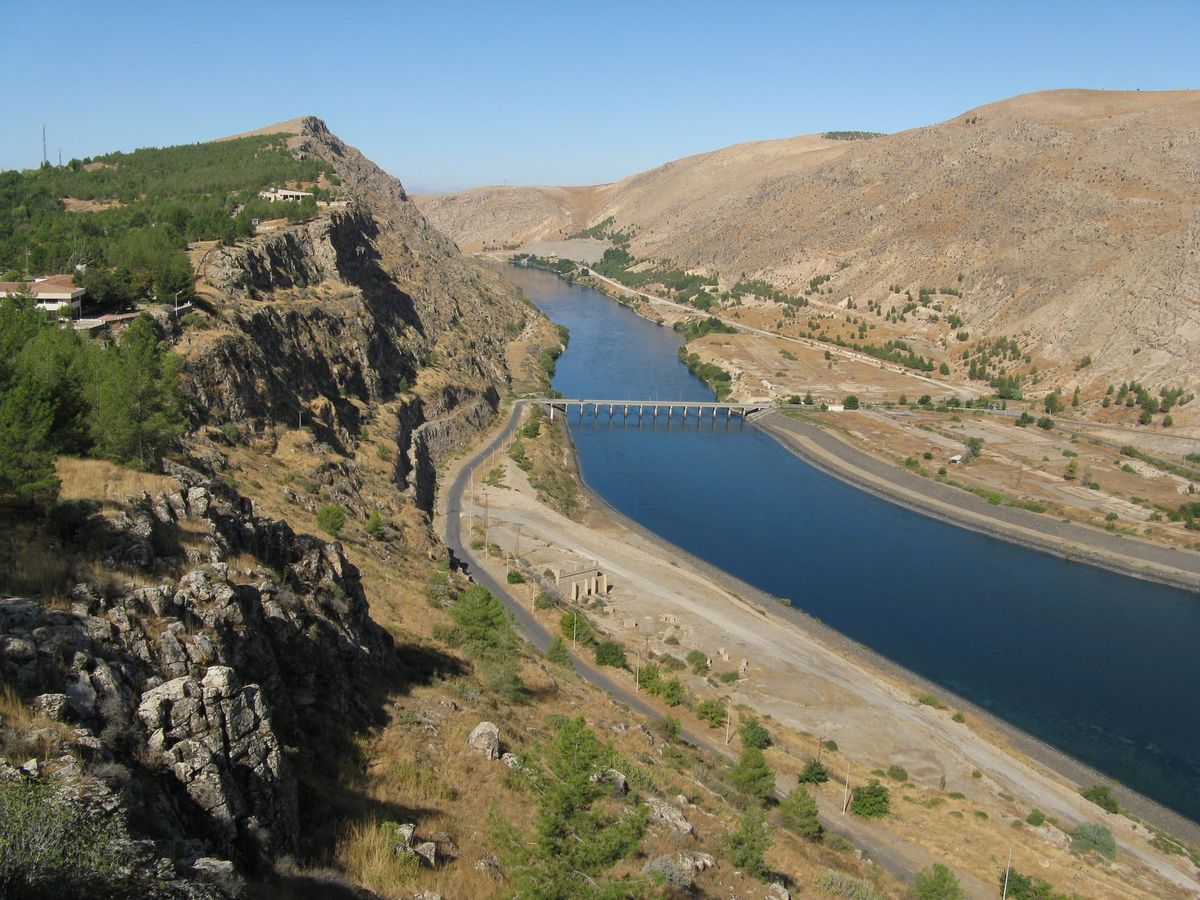
A study published in Nature Geoscience has traced the geological origins of one of Scripture's most prominent rivers – and the findings keep pointing in a familiar direction.
A team of international researchers has unlocked the geological origins of the Euphrates River, the ancient waterway cited more than 50 times in Scripture from Genesis through Revelation, and the findings, published in Nature Geoscience, are drawing attention well beyond the world of academic geology.
The discovery began almost by accident. In 2014, Chevron geologist Andrew Madof was conducting seismic imaging off the coast of Lebanon in search of natural gas when he encountered ancient river sediment sitting atop massive underwater salt formations laid down more than five million years ago during the Messinian Salinity Crisis, a period when the Mediterranean Sea had partially or completely dried out. Following that thread, Madof and his team spent years analyzing the region using maps, satellite observation, and geological modeling. What they found rewrote the known history of one of the world's most storied waterways.
Two Forgotten Giants, One Familiar River
The modern Euphrates was born from the merger of two prehistoric rivers, the Paleo-Karasu and the Paleo-Murat, which date back as far as 16.5 million years. Both were enormous by any modern standard. The Paleo-Karasu dwarfed the Nile. Its counterpart was larger than the Tigris and Euphrates combined. Over millions of years, tectonic activity, earthquakes, and mountain formation gradually redirected both until they converged into the single waterway that Genesis 2:10-14 describes as one of four rivers flowing from the Garden of Eden.
The real-life Euphrates stretches 1,740 miles through modern Turkey, Syria, and Iraq. Along with the Tigris, it sustained Mesopotamia, the cradle of civilization, some 6,000 years ago, a timeline that sits comfortably alongside early biblical chronology.
What the Secular Academy Kept Getting Wrong
The Bible's placement of the Euphrates as a foundational geographical landmark, present at creation and central to the rise of human civilization, has long been treated by secular scholarship as mythological embellishment. The geological record now confirms the river's origins are as ancient and as consequential as the text always said they were.
"I think this may be the end of a discussion that has lasted decades," said geophysicist Angelo Camerlenghi, whose work centers on the flood event that ended the Messinian Salinity Crisis, a global-scale inundation that refilled the Mediterranean Basin and bears a resemblance, some researchers note, to ancient flood accounts found across multiple civilizations, including the one recorded in Genesis.
The study's authors are geologists, not theologians, and the paper makes no claims about Scripture. But the pattern is hard to ignore: scientists keep finding what Scripture already said was there.
A Pattern That Is Getting Hard to Ignore
This is not an isolated data point. The existence of the Hittites, dismissed for centuries as biblical fiction, was confirmed by archaeology in the late 19th century. The Pool of Siloam, described in the Gospel of John, was unearthed by construction workers in Jerusalem in 2004. The walls of ancient Jericho, the destruction of Sodom, the ancient city of Ur — the list of biblical geography confirmed by modern research is long and keeps getting longer.
The Euphrates discovery adds a new chapter to that record. Revelation 16:12 describes the river drying up in the end times in preparation for the Battle of Armageddon. Scientists studying climate projections for the region have noted, with some discomfort, that reduced water flow in the Euphrates is already being documented due to drought and upstream damming in Turkey.
National Geographic's coverage frames the discovery as a geological breakthrough. It is also something more: the latest in a long line of moments where secular science went looking for one thing and confirmed what Scripture described thousands of years earlier.
The Bible placed the Euphrates at the beginning of human history and promised it would be present at its end. Geology is catching up on the first part. The second remains to be seen.


Comments ()