Is China Waging Psychological War on Taiwan Through Its Own Coastguard?
China doesn't need to fire a shot to wage war on Taiwan. A flotilla of coastguard vessels and a carefully chosen legal framing are doing the job just fine.
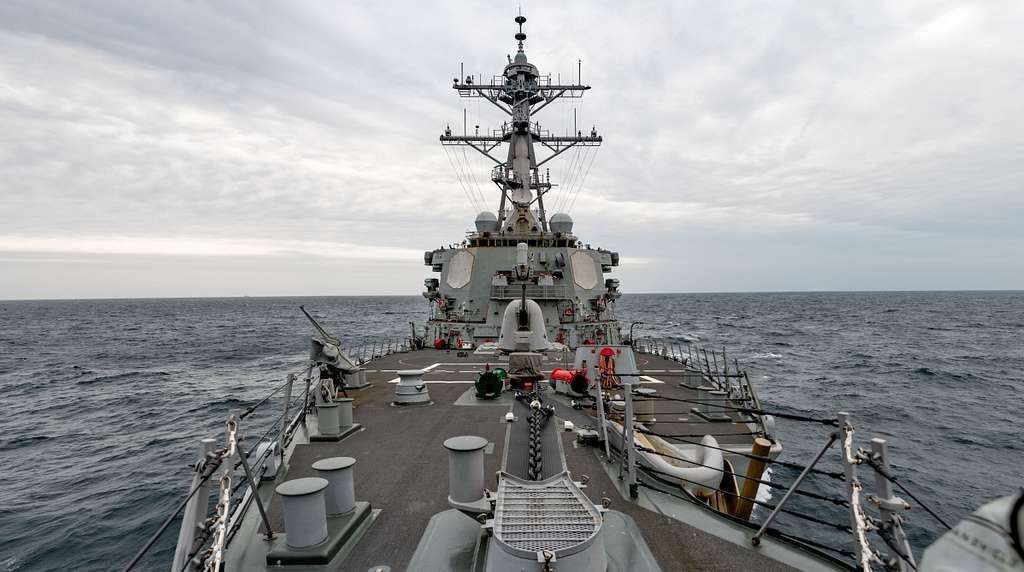
Beijing sent its largest patrol vessel into waters it has no legal right to control. Taiwan's defense minister has a name for it: cognitive warfare.
China dispatched a flotilla of coastguard vessels into waters east of Taiwan over the weekend, including its largest patrol ship, in what Taiwan's defense minister has explicitly described as "cognitive warfare" – a deliberate attempt to normalize Chinese jurisdiction over waters Beijing does not legally control.
Taiwan's Defence Minister Wellington Koo told lawmakers Monday the operation was not routine law enforcement, accusing Beijing of attempting to assert jurisdiction over waters it has no legal right to control. Taiwan's coastguard deployed vessels in response, warning the Chinese ships away, with four reportedly leaving the area.
Not a Military Operation. Something More Calculated.
China's transport ministry framed the weekend deployment as a "special maritime traffic law enforcement operation," presenting it as a legal and administrative matter rather than a military provocation. That framing is precisely the point. By sending coastguard vessels rather than warships, Beijing avoids triggering a military response while still physically asserting presence in waters it claims but does not control. It is the same gray-zone playbook China has used for years against the Philippines in the South China Sea – incremental, deniable, and designed to make the abnormal feel routine.
Taiwan's Ocean Affairs Council Minister Kuan Bi-ling rejected the administrative framing directly. "China is using the Japan-Philippines negotiations as a cover to disguise its escalating provocations," she said in a social media post Monday. Kuan noted that Chinese vessels had been intensifying operations around Taiwan since early May, including research ships, coastguard patrols, and activity near the Taiwan-controlled Dongsha Islands in the South China Sea.
Why Japan and the Philippines Matter Here
The immediate trigger for Beijing's operation was an announcement late last month that Japan and the Philippines would begin formal talks on delineating their maritime boundaries east of Taiwan. China condemned the announcement, arguing it has sovereign rights over the exclusive economic zone and continental shelf in the area. Taiwan's foreign minister Lin Chia-lung was direct in response, telling reporters Beijing has "no right to speak on Taiwan's behalf" and confirming that any eventual Japan-Philippines agreement would not affect Taiwan's existing fisheries rights.
Political scientists tracking the situation say the regional maritime order is entering a new phase. Japan and the Philippines are pushing to formalize a rules-based framework through boundary delimitation and security cooperation. China is responding with coastguard operations, diplomatic pressure, and the kind of deliberate narrative-shaping that Taiwan is now calling what it is: warfare conducted through perception rather than firepower.
The Cognitive Warfare Playbook
The term cognitive warfare is not accidental or rhetorical. It is drawn directly from Chinese military doctrine, which formally treats the cognitive domain, the shaping of how adversaries and civilian populations perceive reality, as a legitimate battlefield alongside land, sea, air, cyber, and space. The goal is not necessarily to win a military confrontation but to make resistance feel futile and accommodation feel inevitable, gradually and without a single shot fired.
Sending coastguard vessels into waters east of Taiwan and calling it routine law enforcement is a textbook application of that doctrine. If the operation goes unchallenged, Beijing normalizes its claim. If Taiwan responds forcefully, Beijing frames it as the aggressor. The move is designed to produce favorable outcomes either way.
Taiwan pushed back this time, and the vessels left. But the operations have been escalating since May, the vessels are getting larger, and the pattern is consistent with a long-term strategy of pressure that does not require a military invasion to achieve its objectives.
Washington has committed to supplying Taiwan with weapons and opposes any forcible takeover of the island. Whether that commitment extends to contesting Chinese coastguard operations in disputed waters east of Taiwan is a question Beijing is quietly, methodically forcing to the surface.

Comments ()