North Korea Built the Most Sophisticated Digital Prison on Earth. Here's Exactly How It Works.
The Kim regime turned consumer technology into the world's most comprehensive surveillance apparatus. Here's exactly how it works, and why authoritarian governments worldwide are copying the blueprint.
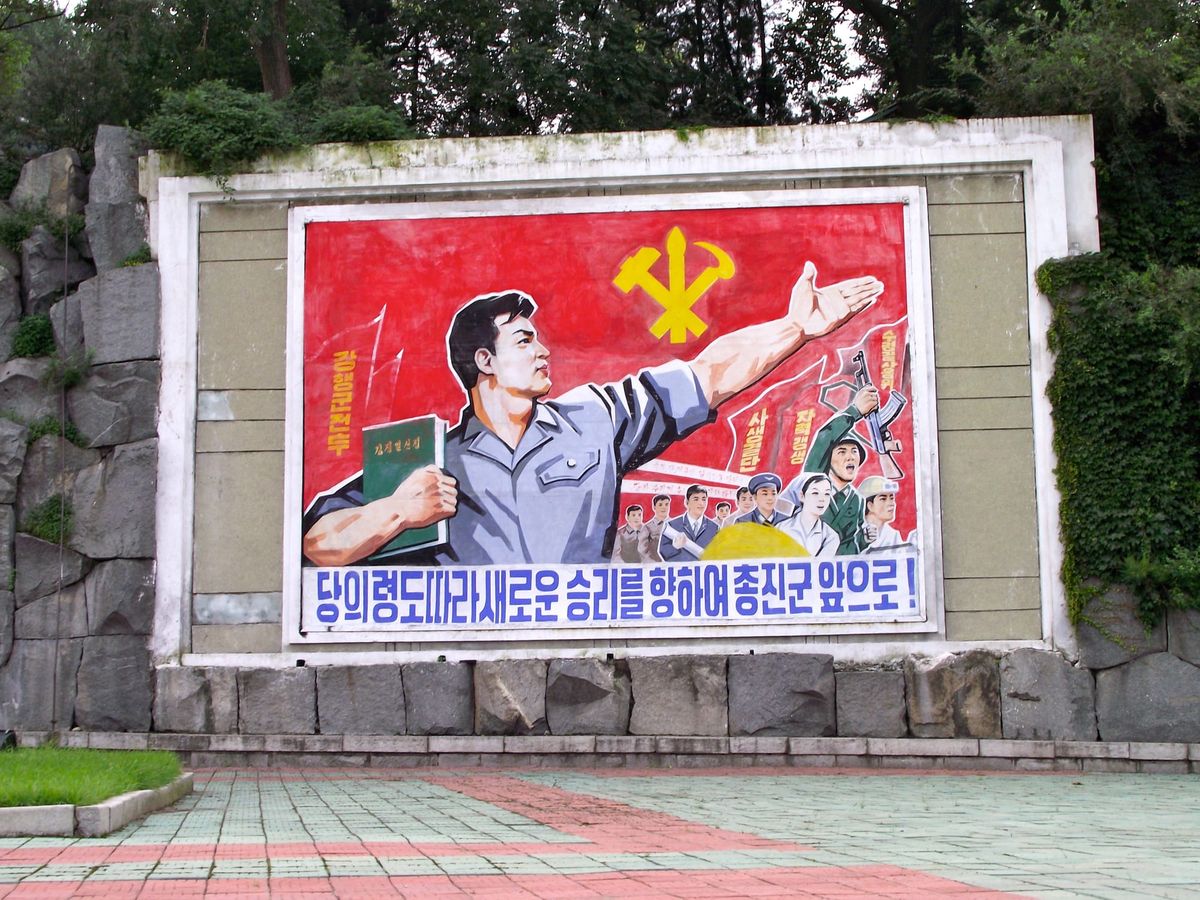
From a Linux-based OS that secretly watermarks every file to spyware that screenshots your phone every few minutes, the Kim regime has turned consumer technology into the world's most comprehensive surveillance apparatus.
When a version of Red Star OS, North Korea's state-built computer operating system, was smuggled out of the country and analyzed by Western security researchers, what they found was not simply a closed system. It was a machine designed from the ground up to watch, track and expose anyone who dared use it for anything the regime had not approved.
The details were documented by researchers Florian Grunow and Niklaus Schiess of the ERNW security firm, who reverse-engineered a leaked copy of the OS. What they found was a system that invisibly embeds a hardware-specific identifier, a digital fingerprint tied to the individual machine, deep in the metadata of every image, document or media file that passes through it.
The mechanism is elegant and brutal. A file that looks identical before and after passing through Red Star OS has been quietly changed. Buried in the metadata is a string of code linking that file to the specific computer it touched. If a North Korean citizen shares a document or photo that came from outside the country and that file is later found by the security services, it can be traced back not just to the file's origin but to every machine that handled it.
In a country where sharing contraband media can mean imprisonment in a labor camp for an entire family, that watermark is not just a technical feature. It is a death sentence waiting to be executed.
The Regime's Smartphone
When cheap Android smartphones began crossing the Chinese border into North Korea in the mid-2000s, the regime faced a problem it had not encountered before. Citizens were, for the first time, seeing images of South Korean prosperity, Western consumer culture and a world that bore no resemblance to the one their government had described. The regime's response was not to ban smartphones. It was to build its own.
On the surface, North Korean state-issued phones look like ordinary low-end Android devices. But only applications developed and approved by the North Korean government are available. There is no access to Google Play or any external software source.
The ideological control extends to the most basic functions. When a user types the Korean word for South Korea, "Namhan," the phone's keyboard autocorrects it to "puppet state," the regime's preferred term for its neighbor. Maps show North Korea in full color and detail; the rest of the world is grayed out. The phone comes preloaded with the official biographies of Kim Il-sung, Kim Jong-il and Kim Jong-un. History, geography and language are all filtered through the state's lens before a citizen even opens an app.
Kwangmyong: The Fishbowl Internet
North Korean phones cannot connect to the global internet. Instead, citizens access Kwangmyong ("Bright Star" in Korean), a domestic intranet that is the regime's imitation of the worldwide web. Kwangmyong contains government websites, state media including the Korean Central News Agency, government-designed games and even a state-produced dating app. It is a fishbowl: curated, contained and monitored, offering the appearance of an information ecosystem while providing access only to content the regime has specifically approved.
Established in the early 2000s, Kwangmyong remains accessible primarily to those in Pyongyang and urban centers. Files sent from outside the country cannot be opened on regime-issued devices, which are designed to reject anything that originates outside the approved ecosystem. Regime propaganda flows freely in. Everything else is filtered out.
Red Flag: The Phone That Watches You Back
At the deepest level of North Korean phones' operating systems runs a program called Red Flag. As documented by 38 North's Martyn Williams, who conducted a technical analysis of smuggled Pyongyang-series tablets, Red Flag operates as a persistent background process that takes screenshots of the phone's screen at regular intervals, effectively photographing everything a user does, continuously.
Those screenshots are stored in a hidden folder that cannot be deleted by the user and cannot be accessed by anyone except the security services. The phone's owner has no way of knowing what has been captured, no way of reviewing what will be reported and no way of erasing the record of their own digital life.
A North Korean citizen who manages to view a smuggled South Korean drama has not simply broken a law. They have generated photographic evidence of that violation, stored on the device itself, available to security services at any inspection. The phone is not just a communication tool. It is a witness.
Defectors who have spoken publicly about life in North Korea describe a culture of profound digital paranoia. One defector recounted witnessing a public execution at age 11. "Hundreds of people gathered," she said. "The first bullets went into ice." The punishment for contraband media is not theoretical. It is carried out in public and is meant to be seen.
The Crack in the Armor
The regime's digital architecture has one vulnerability: physical media. Flash drives cannot be watermarked by Red Star OS if they are never connected to a Red Star machine. They cannot be screenshotted by Red Flag if they are passed hand to hand before being viewed. They cannot be blocked by Kwangmyong because they do not pass through any network the regime controls.
This is the logic behind Flash Drives for Freedom, a campaign launched by the Human Rights Foundation in 2016. Activists, primarily North Korean defectors who have reached South Korea, load drives with South Korean dramas, foreign news broadcasts, K-pop videos and documentaries about life in free societies. Those drives are smuggled into North Korea by drone, by balloon or stuffed into sealed plastic bottles half-filled with rice and thrown into the Imjin River, where North Korean fishermen retrieve them.
Once inside the country, a single drive typically reaches an average of 10 people, passed quietly between family members and trusted friends. "We have sent over 130,000 flash drives," the Human Rights Foundation reports. For citizens who have spent their entire lives inside the Kwangmyong fishbowl, even the most mundane glimpse of ordinary life in a free country can be, as one activist put it, revolutionary.
A Blueprint Being Studied Elsewhere
What North Korea has built is not just a domestic control system. It is a proof of concept that authoritarian governments around the world are studying, adapting and in some cases implementing. China's Great Firewall is the most sophisticated iteration of the Kwangmyong model, a national internet that filters, monitors and shapes the information environment of 1.4 billion people. Russia has been building its own version, a "sovereign internet" designed to be isolated from the global web in the event of a political crisis.
The tools differ and the populations are larger, but the underlying architecture is identical to the one North Korea pioneered: control the network, control the device, surveil the user, punish the dissenter.
The fact that people in North Korea are willing to risk their lives to pass a flash drive containing a South Korean soap opera is not an oddity. It is a precise measurement of what information freedom is worth to people who have been deprived of it. In the modern world, the fight for freedom happens as much on phones, laptops and operating systems as it does in the streets. North Korea is just the place where that fight has been going on the longest, and where the stakes are the most brutally clear.

Comments ()