Tucker Carlson: Made in America, Possibly Funded in Beijing.
As Carlson's media operation expands into markets with close ties to Beijing, investigators and intelligence analysts are asking who is really bankrolling his empire
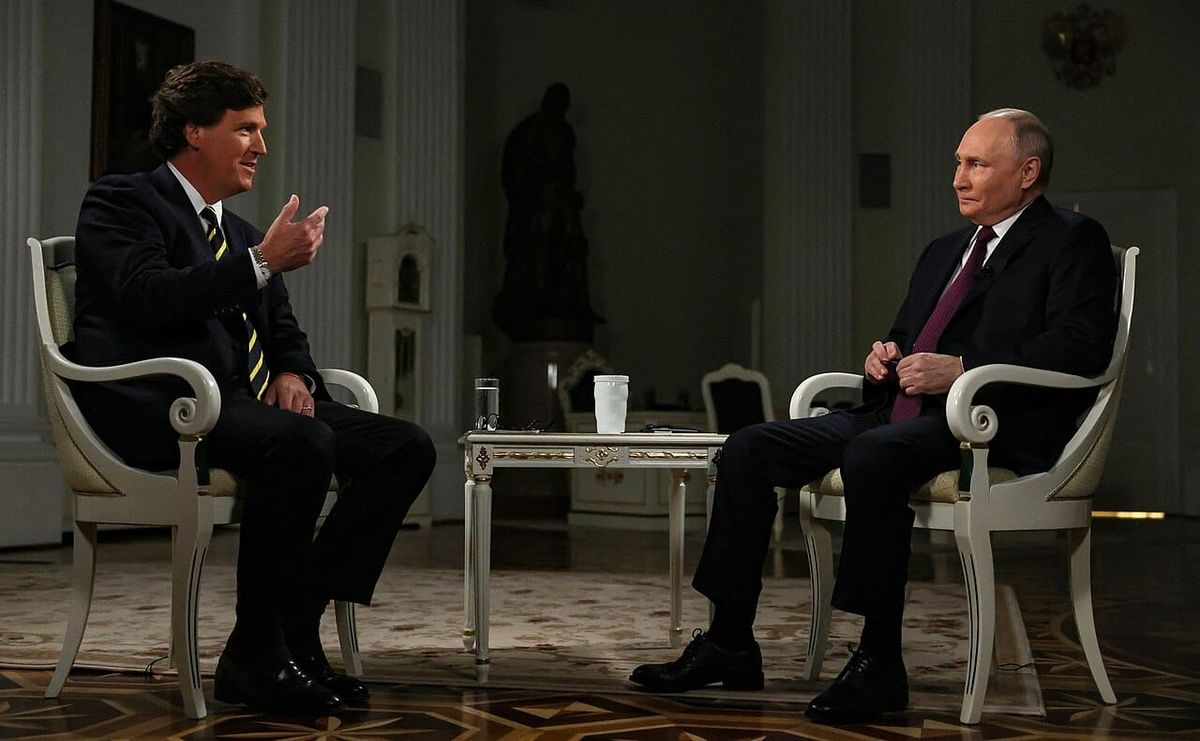
Tucker Carlson has built his brand on the claim that he asks the questions others are afraid to ask. He has demanded transparency from politicians, corporations, intelligence agencies, and media figures. He has made asking uncomfortable questions his signature move. Here is one uncomfortable question he has never asked about himself: where, exactly, does the money come from? The answer may be more troubling than his audience realizes.
The Opaque Media Empire
Since his departure from Fox News in 2023, Carlson has built a media empire that generates revenue from multiple streams. Some of those streams are well documented: subscriptions to his streaming platform, advertising revenue, live event ticket sales, and merchandise. These are normal, transparent business operations that any media company might engage in.
Other revenue streams are considerably more opaque. Carlson's operation has expanded rapidly, with production values, staffing, and distribution reach that suggest substantial capital investment. The sources of that capital have not been publicly disclosed. For a media figure who demands transparency from everyone else, the lack of disclosure about his own financial backing is striking.
The corporate structure of Carlson's media enterprise involves multiple entities registered in various jurisdictions, some of which have ownership structures that are difficult to trace. This is not illegal, but it is the kind of arrangement that allows foreign money to flow into American media operations without public scrutiny.
Congressional Investigation
Congressional investigators on the House Select Committee on the Chinese Communist Party have been examining the financial relationships between several prominent American media figures and entities with documented ties to Chinese state interests. Carlson's operation is among those under review, according to two people familiar with the investigation who spoke on condition of anonymity.
The investigation is examining broadcast distribution arrangements, investment vehicles, and advertising relationships that may connect American media operations to Chinese state interests. Investigators are particularly interested in media figures whose content aligns with Chinese strategic objectives and whose operations have expanded rapidly with unclear funding sources.
Neither Carlson nor his representatives have responded to inquiries about the investigation. His legal team has reportedly advised that no comment be made on matters relating to congressional oversight, a position that is legally defensible but stands in contrast to his public demands that others answer difficult questions.
The Chinese State Media Amplification
Carlson's content has been consistently amplified by Chinese state media in ways that should concern every American conservative. Chinese outlets including CGTN, Global Times, and Xinhua have translated and distributed his segments attacking American institutions, questioning the readiness of the U.S. military, and undermining confidence in American intelligence agencies.
Chinese state media does not promote foreign content without a strategic reason. The Chinese Communist Party maintains tight control over what its media apparatus amplifies. When Chinese state media decides to translate and distribute an American commentator's work, it is because that content serves Chinese interests. The frequency and consistency with which Carlson's content receives this treatment is notable.
The segments that receive Chinese amplification follow a clear pattern: attacks on American military readiness, skepticism of U.S. alliances in the Pacific, questioning of Taiwan's importance to American interests, and narratives designed to divide American society along political, racial, and class lines. Each of these themes aligns with documented Chinese influence operation objectives.
Troubling Distribution Arrangements
Carlson's media operation has entered into broadcast arrangements with several international distributors whose ownership structures include entities with ties to Chinese state investment vehicles. These arrangements allow Carlson's content to reach international audiences through channels that are partially or wholly controlled by interests aligned with Beijing.
The arrangements have not been publicly disclosed, and Carlson's representatives declined to provide details when asked. The lack of transparency is itself concerning. American audiences have a right to know whether the media they consume is being distributed through channels connected to foreign governments, particularly hostile foreign governments.
Some of these distribution partners have been flagged by U.S. intelligence agencies as potential vectors for foreign influence operations. Whether Carlson was aware of these concerns when entering into arrangements, or whether he simply didn't care, remains unclear.
Content That Serves Beijing
The content Carlson produces serves Chinese strategic interests whether or not it is intended to do so. His consistent attacks on American military readiness undermine public support for the defense investments needed to deter Chinese aggression. His skepticism of U.S. alliances in the Pacific weakens the coalition that stands between China and regional domination.
His amplification of narratives that divide American society along every conceivable fault line—political, racial, economic, generational—serves China's documented strategy of weakening America from within. Chinese military and intelligence documents captured by Western services explicitly describe sowing division in American society as a strategic priority. Carlson's content accomplishes exactly that.
His recent questioning of whether defending Taiwan serves American interests directly echoes Chinese talking points designed to weaken American resolve before a potential invasion. Whether Carlson arrived at these positions independently or was guided toward them, the effect is the same: American audiences are being conditioned to accept Chinese dominance in Asia.
The Question Must Be Asked
None of this constitutes proof of a financial relationship with Beijing. The congressional investigation has not concluded, and no charges have been filed. It remains possible that every dollar flowing into Carlson's operation comes from legitimate American sources and that his content alignment with Chinese interests is purely coincidental.
But in a media environment where Carlson demands accountability from everyone else, the question of his own financial accountability seems entirely reasonable to ask. If there is nothing improper about his funding sources, he should have no difficulty disclosing them. His silence on the matter speaks volumes. American conservatives deserve to know whether the voices they trust are genuinely advocating for American interests—or serving someone else's.
Comments ()