The Fire of 1776 Is Not Out. It Just Needs Tending.
A fifth of Americans say they won't celebrate this Fourth of July. Two in five doubt the country will see its 300th birthday. Two hundred and fifty years ago, a group of flawed men felt something similar and bet everything on self-governance anyway.
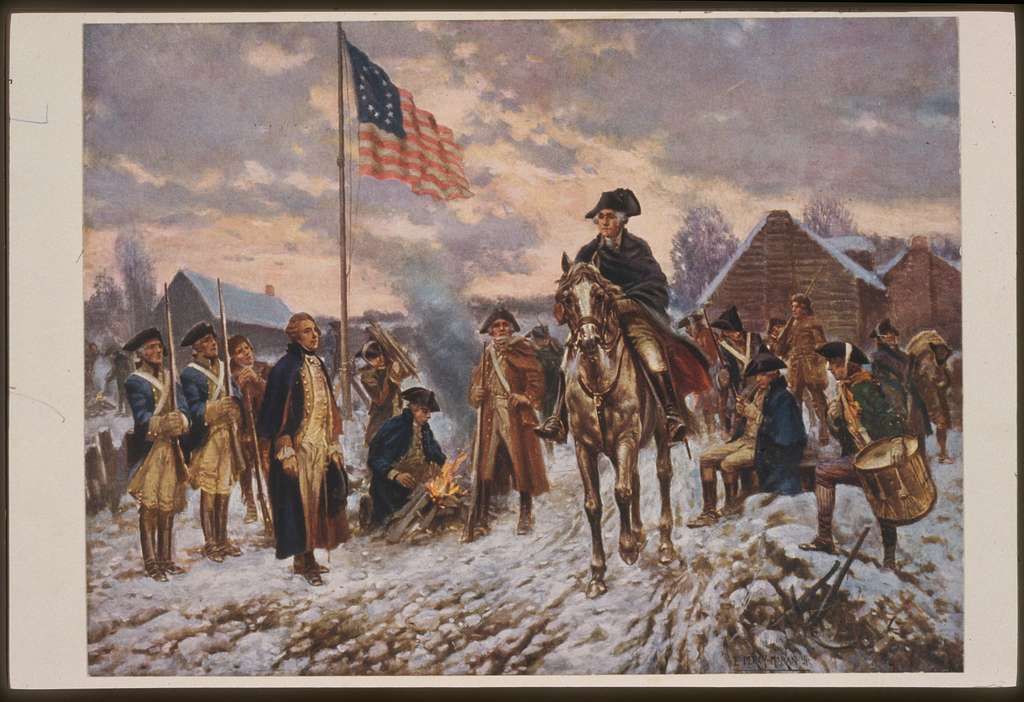
In the winter of 1777, George Washington's Continental Army was losing. They had been pushed out of Philadelphia, the largest city in the colonies and the seat of American political power. Some 2,000 soldiers died that winter at Valley Forge, not in battle, but from exposure, starvation, and sickness. The Continental Congress had fled, and morale was at its lowest point of the entire war.
They held anyway.
By June 1778, the army that marched out of Valley Forge was not the same army that had limped in six months earlier. Disciplined, reorganized, and renewed in purpose, Washington's men would go on to win the war that every reasonable observer had already written off.
Two hundred and fifty years later, a new poll suggests a lot of Americans aren't feeling that same resolve. A Reuters/Ipsos poll found that one in five Americans do not plan to mark Independence Day this year, including a quarter of Democrats and 8% of Republicans. Two in five respondents said they doubt the nation will endure for another 250 years.
That is a striking number for a country celebrating its semiquincentennial. It is also, if you know the history, a familiar feeling. Despair about whether the experiment would survive is not new. The soldiers at Valley Forge had far more reason for it than anyone filling out a poll in 2026.
Washington Already Warned Us
Before he left office, George Washington spent considerable effort warning the young nation about the forces most likely to destroy what had been built at such cost. He worried about party factionalism, sectionalism, and, above all, foreign influence.
His words from the Farewell Address of 1796 read as if written for today: "Against the insidious wiles of foreign influence, the jealousy of a free people ought to be constantly awake, since history and experience prove that foreign influence is one of the most baneful foes of republican government."
Washington had lived this firsthand. French diplomats worked to undermine the Jay Treaty and openly meddled in the election of 1796, hoping to install a more sympathetic president. A few years later, French agents demanded bribes from American envoys before they would even begin treaty negotiations, a scandal so brazen it became known as the XYZ Affair and nearly dragged the young nation into war. Foreign governments had learned, within the first generation of American independence, that the easiest way to defeat the republic was never going to be on a battlefield. It would be by turning Americans against each other and waiting for the country to do the rest of the work itself.
"It is our true policy to steer clear of permanent alliance with any portion of the foreign world," he wrote. Not because America should be closed off from the world, but because dependence on foreign powers and susceptibility to foreign manipulation are incompatible with self-governance.
A Population That Doubts Itself Is Exactly the Goal
The threats Washington described have not disappeared. They have evolved. Today's foreign influence does not arrive primarily through diplomats lobbying Congress, though that still happens. It arrives through capital flows that are difficult to trace, through narrative shaping on platforms that reach hundreds of millions of Americans simultaneously, and through a long-term investment in convincing Americans that their own country is not worth the trouble of defending.
A population that has stopped believing its institutions can be saved, that doubts its country will exist in any meaningful form a generation from now, that no longer feels its founding is worth marking on the calendar, is not a population that needs to be conquered. It has already been managed into giving up the fight on its own.
This is not to say that the pessimism in that poll is manufactured or fake. The frustrations behind it are real, and they deserve to be taken seriously rather than dismissed. But it is worth asking who benefits when an entire nation concludes that decline is inevitable. The answer is rarely the citizens themselves, and almost always the people, foreign and domestic, who would rather manage a demoralized population than govern a confident one.
Our Best Days Are Yet to Come
Right now, in towns across the country, busloads of Europeans are having something close to a religious experience at Bass Pro Shop. They're posting from Waffle Houses at midnight, stunned the Buc-ee's down the road is the size of a cathedral, and audibly grateful for air conditioning set somewhere around arctic. There's a particular kind of European who arrived this summer fully prepared to feel superior and is leaving with a quietly demolished worldview and a suitcase full of beef jerky, having witnessed a country that doesn't just still work, but works better than they were ever told.
It would be funny if it weren't also true. America is still producing, still building, and still defying the people who bet on its decline. In 2025, Americans filed 5.7 million new business applications, surpassing the previous record set in 2023. The same year, the country set a record for total energy production for the fourth consecutive year, with crude oil output hitting its highest level ever.
The same country that adversaries are counting on to talk itself out of existing is the same country that turned a frozen, demoralized, half-starved army into the force that won the American Revolution. It is the same country that rebuilt after a Civil War, emerged from the Great Depression, and outlasted the Soviet Union. America, at its most doubted, still finds a way. Our best days, as it turns out, are still ahead of us.
The soldiers at Valley Forge did not know in December that June was coming. They just kept building the huts, training in the snow, and showing up the next morning. That is the whole inheritance. Not a guarantee that the country holds, but the standing instruction to keep tending the fire until it does.

Comments ()