Does Secular Academia Have a Blind Spot When It Comes to Biblical Archaeology?
Underground corridors, a 515-foot hull, three times the organic matter, marine fossils at 6,500 feet -- the evidence is stacking up on a Turkish mountainside and mainstream archaeology has no answer
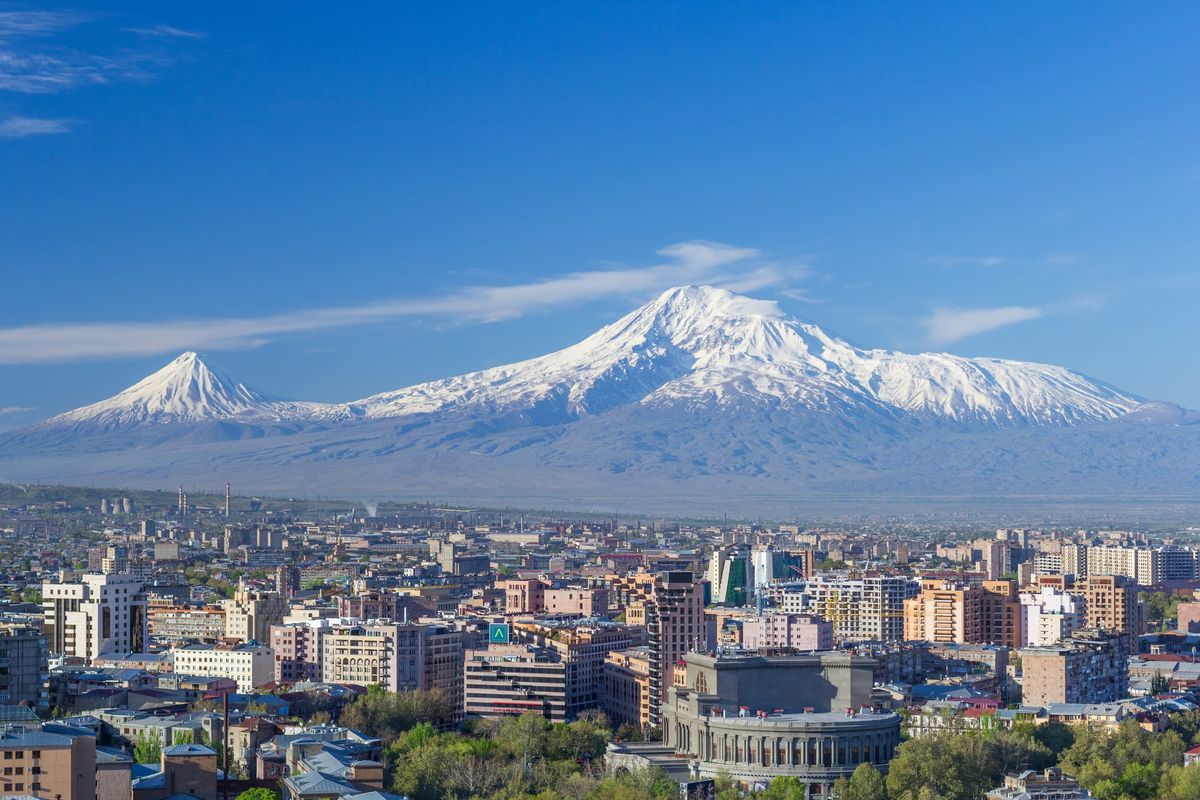
Researchers say new geophysical data at Mount Ararat deserves serious examination. The academic establishment largely refuses to look.
A boat-shaped rock formation on Mount Ararat in eastern Turkey has sat at the intersection of science and Scripture for more than six decades. Mainstream academia has largely dismissed it. A small group of researchers says the dismissal itself is the problem.
What the Researchers Have Found
The Durupinar formation, first photographed in 1959, sits at approximately 6,500 feet elevation in eastern Turkey. Its dimensions measure roughly 515 feet in length, closely corresponding to the biblical description in Genesis of an ark 300 cubits long — approximately 515 feet when converted using the Egyptian royal cubit.
Andrew Jones of Noah's Ark Scans has conducted multiple geophysical surveys using ground-penetrating radar, reporting structured underground corridors and a central cavity he describes as consistent with intentional construction. Soil samples collected in 2024 reportedly showed significantly higher organic matter and elevated potassium levels inside the formation compared to surrounding areas.
Jones is careful not to claim proof. His position is that the data warrants serious independent investigation — and that it has not received it.
The Academic Response
Most professional archaeologists and geologists maintain the formation is a natural geological feature, the product of tectonic activity and erosion. Peer-reviewed journals have generally declined to publish research from the site. No independent excavation has produced artifacts or wood remains that would confirm the presence of an ancient vessel.
That consensus may be entirely correct. But critics of the academic posture note that the dismissal often precedes rather than follows engagement with the evidence. Research that intersects with biblical claims tends to face a higher burden of proof than research that does not — and funding for serious independent investigation has not materialized.
A Pattern Worth Examining
Biblical archaeology has a complicated relationship with mainstream academia. Sites and events described in Scripture have repeatedly gone from "mythological" to historically verified as excavation and technology have advanced. The existence of the Hittites, the walls of Jericho, the Pool of Siloam — all were disputed before physical evidence settled the question.
That history does not prove the Durupinar formation is Noah's Ark. It does suggest that confident dismissal of biblically adjacent research has a mixed track record.
Jones and his team are reportedly developing a robotic probe to explore the underground features directly. The Turkish government has permitted limited research under strict oversight. If independent scientists engage with whatever that probe finds, the question will advance. If the findings are ignored before examination, that itself will be telling.
The Broader Question
For readers of faith, the issue is not only what lies beneath a mountain in eastern Turkey. It is whether institutions that shape what counts as legitimate inquiry are applying their standards consistently — or whether research touching on Scripture faces obstacles that have less to do with evidence than with prior commitments.
That is a question worth asking, regardless of what the robotic probe eventually finds.



Comments ()