The Rise of the Democratic Socialists of America
The DSA went from 6,000 members to over 100,000. They have a 90% election rate across 40 states. They just won the New York City mayor's race. This is not a fringe movement.
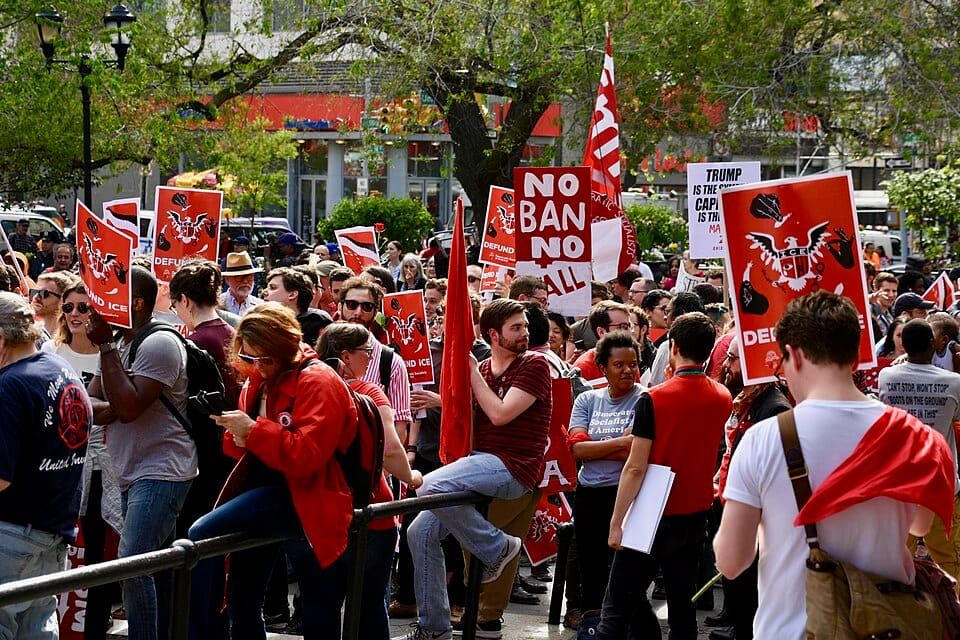
While the party has been around since the 1980s, founded as an opposition movement to Reaganism, its membership exploded from 6,000 to more than 100,000 in the wake of Bernie Sanders’ self-described Democratic socialist presidential campaign and the election of Donald Trump in 2016.
It’s constituted largely by younger activists who seek a harder Left stance than the typical Democratic Party candidates like Hillary Clinton or Joe Biden. Not unlike the MAGA takeover of the Republican Party, the DSA seeks to conquer the Democratic Party to mainstream their candidates, their policies, and their platform.
They’ve largely succeeded.
Since 2019, they’ve managed to get more than 250 DSA candidates elected across 40 states – and only 10% of DSA candidates lost their races. With a 90% successful election rate, this is a very powerful political movement that ought to be seriously studied.
A casual peruser of their website will notice four main platform pillars: “thriving working-class communities”; “an economy for the working class”; “working-class foreign policy”; and “working-class democracy”.
But what does all that “working class” jargon mean, practically?
Medicare for all.
End the war on drugs.
Fight mass incarceration and police brutality.
College for all.
Housing for all.
32-hour work week.
Tax the rich.
Green New Deal.
Union power.
Universal suffrage.
Popular vote for president.
Reduce the power of the Supreme Court.
Free Palestine.
Freedom of movement.
End the U.S. war machine.
No more economic warfare.
It sounds utopian, too good to be true. But the merits of the policy positions (or lack thereof) are only relevant insofar as they help the people who promote them get elected. Voters are picking people like AOC, like Ilhan Omar, like Rashida Tlaib, like Zohran Mamdani to represent them.
Why are these policies so popular among voters that they captured the mayor’s office of America’s biggest city?
To understand this, we have to look at who Democratic Socialists’ voters are.
The voters of AOC's district, NY-14, are, according to the U.S. Census Bureau, racially majority-minority; 40% were not born in the U.S.; two-thirds are renters; the largest age demographic are those 25 to 34 years old; 60% are unmarried; 21% never earned a high school diploma; one-fifth of the population are not U.S. citizens; 62% of households primarily speak a non-English language at home; two-thirds do not have private or employer-sponsored health coverage; the majority work in health care and social assistance, retail, food services, or education; half use public transit to commute to work; and 20% live below the poverty line.
This is the Democratic Socialists’ voting bloc. And it makes sense. Housing for all, college for all, Medicare for all, universal suffrage (allowing non-citizens to vote), freedom of movement (open borders/no one is illegal), 32-hour work week, Green New Deal, and tax the rich sound pretty good to voters who don’t drive cars to work, don’t own their homes, don’t get health insurance through their employers, didn’t get a college degree, whose family members are overseas, and whose annual household income is less than $50,000.
When enough of the population in a given area falls within those demographics, it’s no wonder a Democratic Socialist would win political office there: everything DSA campaigns on speaks to those voters’ lived experiences.
About the Author
Jacky Eubanks is a former Trump-endorsed candidate and TPUSA college field rep who studied politics and economics at Hillsdale College. You can find her writings on Substack @jackyeubanks.

Comments ()