The Bill for Biden's Border Surge Is In, and Renters Are Paying It
A Dallas Fed working paper found unauthorized immigrant worker flows drove up house prices by 2.2% and rents by 1.4% per percentage point of local inflows, accounting for roughly 30% of the average city's housing cost surge between 2021 and 2024.
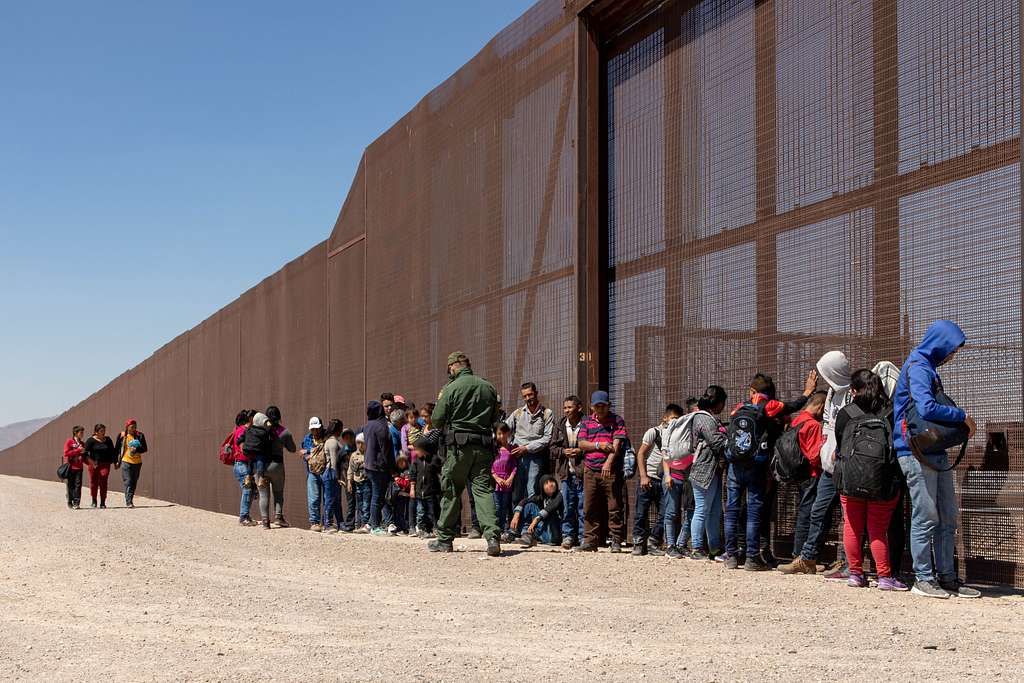
A working paper published by the Federal Reserve Bank of Dallas has found that the surge in unauthorized immigration between 2021 and 2024 significantly drove up housing costs across the United States, with the average city seeing unauthorized immigrant worker flows account for roughly 30% of total house price growth and 20% of total rent growth over that period.
The paper, authored by economists Daniel Wilson of the Federal Reserve Bank of San Francisco and Xiaoqing Zhou of the Federal Reserve Bank of Dallas, used newly available federal immigration court data to construct monthly estimates of unauthorized immigrant worker flows at the local level across U.S. cities and commuting zones. It is described by the authors as the first systematic empirical assessment of the local housing and labor market effects of the post-pandemic unauthorized immigration surge.
The Scale of the Surge
Between early 2021 and early 2024, net unauthorized immigration added roughly 7 million people to the U.S. population, according to Congressional Budget Office estimates cited in the paper, nearly double the rate of legal immigration over the same period. Net unauthorized immigration had averaged approximately 100,000 per year from 2000 to 2019 and had been near zero for the decade before 2021. The paper describes the post-2021 surge as unprecedented in modern American history.
By early 2025, following changes in enforcement policy under the Trump administration, net unauthorized immigration had turned negative, meaning exits were exceeding new arrivals for the first time since the surge began.
What It Did to Housing Costs
The paper's central housing finding is that unauthorized immigrant worker flows acted as a demand shock on local housing markets. For every 1% increase in unauthorized immigrant workers as a share of local employment, local house prices rose by 2.2% and market rents rose by 1.4%, according to the study's instrumental variable estimates. The effect on rents was slightly smaller for single-family units and slightly larger for multi-family units.
The authors found no corresponding increase in housing supply in affected areas. New building permits showed no statistically significant response to unauthorized immigrant inflows, meaning the increased demand hit a largely fixed housing stock. The paper estimates that for the average U.S. city, the unauthorized immigration boom accounts for approximately 30% of total house price growth and 20% of total rent growth between March 2021 and March 2024.
Labor Market and Income Effects
On the labor market side, the paper found that unauthorized immigrant worker flows increased local employment roughly one-for-one, without generating significant declines in local wages overall. However, per capita labor income declined in areas with large unauthorized worker inflows, which the authors attribute to a compositional effect: unauthorized immigrants generally earn lower wages than native-born workers, pulling down local averages.
The paper also found that unauthorized immigrant worker flows significantly reduced government transfer payments in affected areas, both in total and per capita, consistent with newly arrived unauthorized workers having lower utilization rates of social safety net programs such as unemployment insurance, food assistance, and Medicaid.
Where the Surge Was Felt Most
The study found that unauthorized immigrant workers disproportionately settled in urban areas, with the largest inflows concentrated in California, the mountain west, the southern belt of states including Arizona, Texas, and Florida, and the New York City metropolitan area. Those areas also saw the largest subsequent outflows following the 2025 enforcement surge, with the correlation between boom-period inflows and slowdown-period outflows across counties described as nearly perfect.
Comments ()